
News
What Manufacturing Capabilities Should a Professional Peptide Factory Possess?
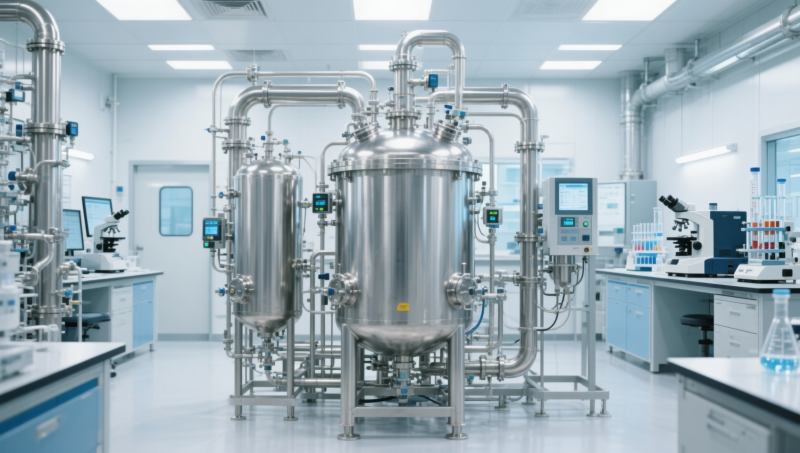
In international procurement and supply chain integration for peptide raw materials, evaluating a peptide manufacturer's comprehensive production capabilities is fundamental to ensuring product quality, timely delivery, and commercial compliance. A professional peptide factory must not only offer versatile synthesis technologies but also maintain a rigorous quality control framework alongside scalable manufacturing capacity.
1. Versatile Synthesis and Purification Technology Platforms
An established peptide manufacturer typically integrates both Solid-Phase Peptide Synthesis (SPPS) and Liquid-Phase Peptide Synthesis (LPPS) technologies, alongside advanced Directed Enzymatic Hydrolysis. This allows the facility to select the optimal process route whether working with complex long-chain peptides, modified sequences, or bulk functional short peptides. Integrated with large-scale preparative High-Performance Liquid Chromatography (Prep-HPLC) and ultrafiltration systems, the factory precisely manages purity specifications and molecular weight distribution.
2. Flexible Scalability: From Milligrams to Multi-Kilogram Commercial Batches
Supporting clients across different growth stages is a crucial indicator of a factory's technical depth. A qualified facility operates versatile production lines capable of supplying milligram-to-gram scale custom synthesis for initial R&D (CRO/CDMO support), while also operating multi-ton reactors and industrial freeze-drying systems to accommodate hundred-kilogram to metric-ton commercial orders for personal care and industrial clients.
3. Stringent Quality Control and Comprehensive Regulatory Documentation
Leading peptide manufacturers operate independent analytical laboratories equipped with advanced instrumentation, including LC-MS, analytical HPLC, and Karl Fischer moisture titrators. Every commercial batch undergoes rigorous screening for purity, sequence accuracy, heavy metals, and bioburden limits. Deliveries are routinely accompanied by standardized Certificates of Analysis (COA), Safety Data Sheets (MSDS), and essential trade documentation to guarantee smooth customs clearance and downstream compliance for global partners.