
News
Under Increasingly Strict Environmental Regulations, How Does a Green Peptide Factory Achieve Non-Hazardous Production?
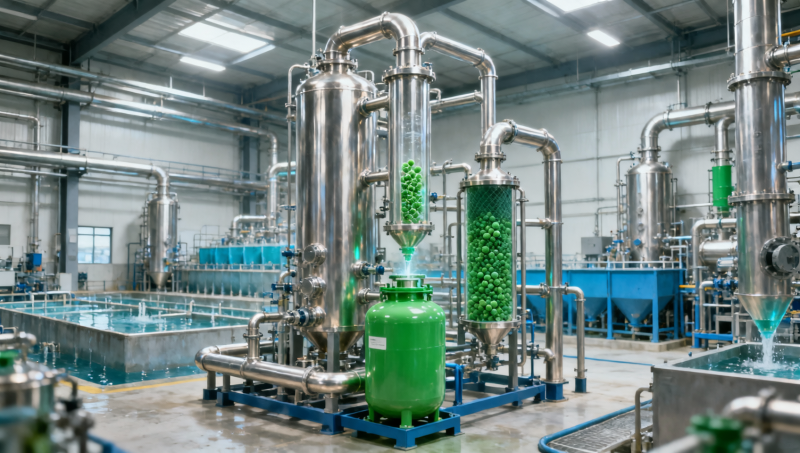
Against the backdrop of tightening global environmental regulations and a growing emphasis on sustainable development, environmental compliance in the chemical and biomanufacturing sectors has become a pivotal factor in evaluating supply chain resilience. As foundational manufacturers of raw peptide materials, leading green peptide factories are achieving non-hazardous and eco-friendly production through process optimization and innovative waste management technologies.
1. Source Reduction: Embracing Green Chemistry and Mild Processes
Green peptide manufacturers integrate sustainable chemistry principles right from the process design stage. During peptide synthesis and enzymatic hydrolysis, facilities prioritize low-toxicity, biodegradable green solvents and biocatalysts over traditional, high-pollution chemical reagents. Furthermore, by optimizing reaction pathways and improving atom economy, factories significantly reduce the generation of unwanted byproducts and hazardous waste at the source.
2. Process Control: High-Efficiency Solvent Recovery and Recycling
Organic solvents are extensively utilized in solid-phase peptide synthesis (SPPS) and downstream purification. Modern eco-friendly peptide facilities are equipped with advanced closed-loop solvent recovery systems. Utilizing precision distillation and membrane separation technology, these systems efficiently capture, purify, and reuse organic solvents throughout production, substantially increasing solvent recovery rates and minimizing volatile organic compound (VOC) emissions.
3. End-of-Pipe Treatment: Standardized Waste Stream Decontamination
To handle manufacturing emissions, green factories implement rigorous end-of-pipe waste management systems. Industrial wastewater undergoes multi-stage treatment—combining bio-degradation and Advanced Oxidation Processes (AOPs)—to ensure discharged water meets or exceeds strict regulatory environmental standards. Concurrently, process exhaust gases are deeply purified through multi-stage scrubbing and activated carbon catalytic absorption systems prior to controlled discharge.
By maintaining environmental compliance across the entire manufacturing lifecycle, green peptide factories achieve eco-friendly operations while securing continuous, reliable production capacity—providing global B2B partners with a stable and compliant peptide raw material supply.